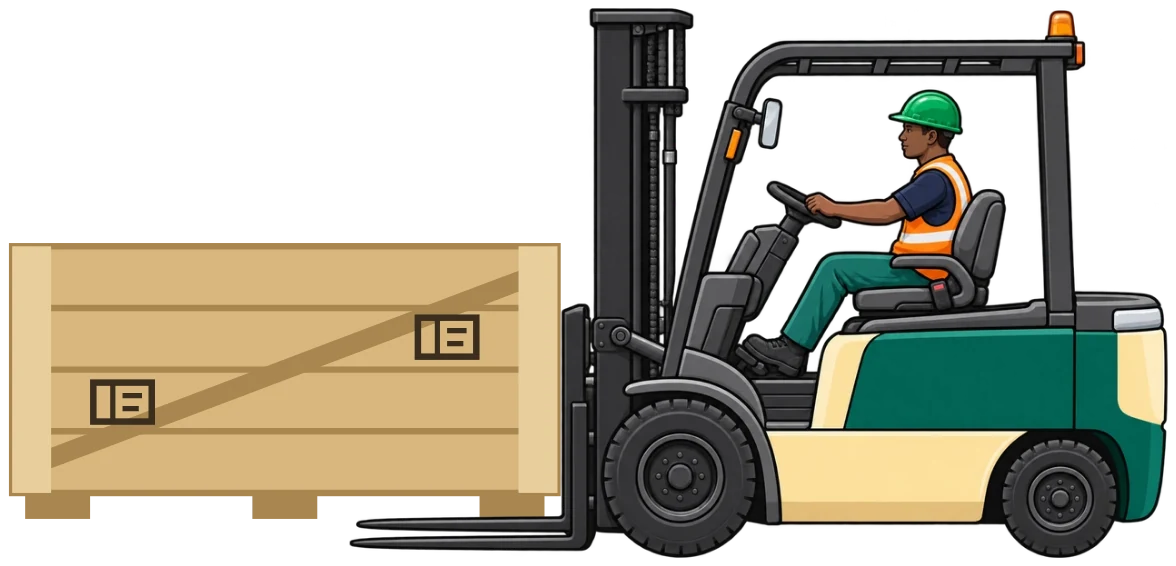
Crates, pallets, dunnage? Check the mark before it ships.
Solid wood that crosses a border needs the ISPM 15 mark; plywood and thin wood don’t. Check yours, then we pack the container at our Germiston depot and weigh it for the VGM.
- 4 codesHT, DH, MB or SF on the mark
- 6 mmThinner wood is exempt
- 22 mOur weighbridge, for the VGM
Check the wood, then pack the box.
- 01
The crate
Solid timber, so it carries the mark: ZA, the producer’s code and HT, on two opposite sides. Into the back of the box.
- 02
The pallet
The mark sits on the pallet’s blocks. Marked pallets can be reused, as long as they haven’t been repaired.
- 03
The plywood case
Made wholly of processed wood, so it’s exempt: no mark needed.
- 04
The machine’s skids
Solid wood under a steel machine still carries the mark. Then the packed box goes on our weighbridge for the VGM.
Request a packing quote
Your shipment
Step 1 of 7- Cargo
- —
- Wood
- —
- Direction
- —
- Job
- —
- Container
- —
- When
- —
- ISPM 15 check
- Optional
The mark, then the box
ISPM 15 is the international standard for wood packaging. Solid wood that travels with cargo across a border is debarked, treated and marked; processed and thin wood is exempt. South Africa has applied it to imports and exports since 1 January 2005.
Needs the mark
- Pallets and skidsSolid wood, any species
- Crates and casesAnd the solid parts of plywood crates
- Dunnage and bracingEvery piece, marked along its length
- Cable drums and reelsNamed in the standard
Exempt
- Plywood, OSB, particle boardMade wholly of processed wood
- Thin wood6 mm thick or less
- Sawdust, shavings, wood woolLoose packing fill
- Wood fixed to the vehicle or boxPermanently attached parts
The mark
The IPPC symbol, the country code (ZA), the producer’s registration code and the treatment code (HT, DH, MB or SF), inside a border, preferably on two opposite sides. South African providers add the treatment date outside the border.
Repaired or rebuilt
Up to about a third replaced: new parts of treated or processed wood, each added part marked. More than that: the old marks obliterated, and the whole unit re-treated and re-marked.
Our part
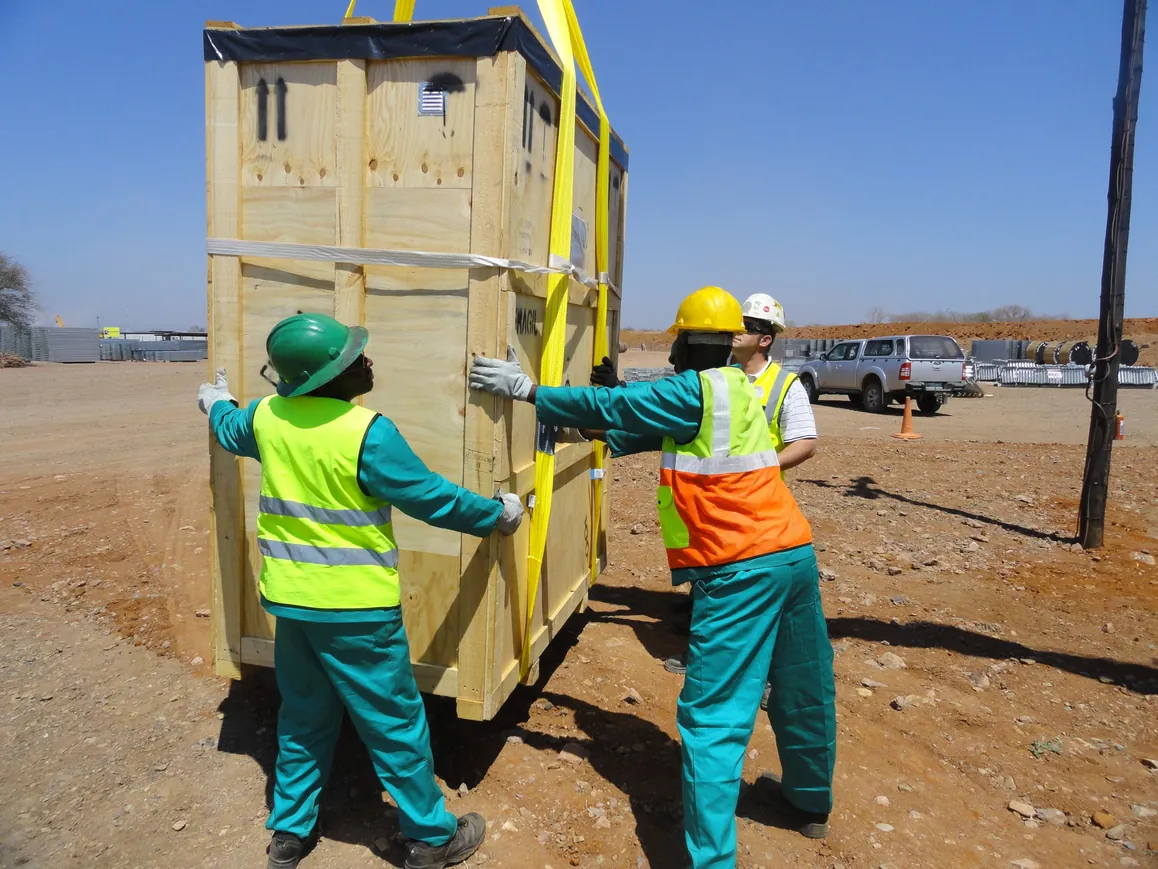
We pack it into the container at our customs-licensed depot in Germiston and weigh the packed box for the VGM. We don’t treat, mark or supply wood packaging.
Where we operate
Our head office and 24-hour control centre are at 69–71 Barlow Road, Jupiter, Germiston, beside our customs-licensed depot, with an office in Durban. At the depot, our team packs and unpacks containers of crates, pallets, machinery and breakbulk, and our weighbridge weighs the packed boxes for the VGM.
- Germiston depot69–71 Barlow Road, Jupiter, Germiston 011 873 4786
- Durban · Greyville81 Berea Road, Greyville, Durban 031 305 0438

Part of Shipping & General Transport
Shipping & General Transport is a privately owned South African logistics company built on trustworthiness, perseverance and reliability. Crating Companies is one of its specialist services: check the wood in your shipment against ISPM 15, then we pack the container at our depot.
Visit shippingandgeneral.co.zaQuestions about crates and ISPM 15
Can’t find your answer? Our team is a phone call away.
Call 011 873 4786What is ISPM 15?
The international standard for wood packaging in trade, from the International Plant Protection Convention. Solid wood that travels with cargo is debarked, treated against pests and marked. South Africa has applied it since 1 January 2005, to wood coming in and going out.
Which wood needs the mark?
Packaging made of raw, solid wood: pallets, crates, boxes, packing cases, dunnage, cable drums and reels. South Africa’s Department of Agriculture also names packing blocks, loading boards, pallet collars and skids. The check above sorts yours.
Is plywood exempt?
Packaging made wholly of processed wood, like plywood, OSB, particle board or veneer, is exempt. A plywood crate on solid skids or battens isn’t wholly processed, so its solid parts still need treating and marking. Wood 6 mm thick or less is exempt too.
What does the mark look like?
A rectangle or square with a border: the IPPC symbol on the left, then the country code (ZA for South Africa) with the producer’s registration code, and the treatment code: HT for heat treatment, DH for dielectric heating, MB for methyl bromide or SF for sulphuryl fluoride. It must be legible and permanent, not hand-drawn, not red or orange, and preferably on two opposite sides.
Does South Africa want a date on it?
Yes. Since 1 January 2016, South African providers mark the treatment date (day, month and year) outside the border of the mark. Where the wood was treated elsewhere, a heat treatment provider may use the date it made the packaging.
Who can treat and mark wood in South Africa?
Only manufacturers and treatment providers registered with the Department of Agriculture. Registration lasts three years, the department keeps the register, and a provider can’t lend its registration or stamp to anyone else. Check that your supplier is on it.
Does dunnage need the mark?
Yes. All the dunnage that secures or supports the goods is treated and marked, so it’s marked along its full length at short intervals. Short offcuts that don’t carry the whole mark shouldn’t be used.
Can we reuse marked pallets?
Yes, if they haven’t been repaired or altered: they need no new treatment or mark. Repaired with up to about a third of the parts replaced, the new parts must be treated or processed wood, each marked. With more replaced, the old marks are obliterated and the whole pallet re-treated and re-marked.
What happens if the wood isn’t compliant?
The importing country decides: the wood can be detained, treated, destroyed or sent back. Coming into South Africa, wood packaging is inspected at the ports of entry, and infested wood is treated at the importer’s expense or re-exported. Going out, non-compliant wood can stop the consignment being certified for export.
Do you build crates or mark wood?
No. We don’t treat, mark or supply wood packaging. We pack your crates, pallets and cargo into the container at our customs-licensed depot in Germiston, with a fleet of 10 forklifts. Our sister site plans the packing.
What happens after the box is packed?
We weigh it on our 22 m weighbridge, SAMSA-authorised for Method 1, for the VGM certificate, and we can truck it down the N3 to the Durban terminal. Our sister site works back from the stack closing.
What does it cost?
We don’t publish prices. Answer the short questions in the quote form, add your ISPM 15 check if you like, and we’ll quote on your actual shipment.
What’s going in the box?
Seven short questions, plus your ISPM 15 check if you like. No prices online, just a quote on your actual shipment.